

Somatic Trauma Therapy for Women in Massachusetts
Supporting your female nervous system to move out of survival mode into safety and true presence. →
How do I know if Somatic Trauma therapy is right for me?
Many of the women I work with present as capable and put-together, but privately feel burnt out, chronically anxious, and disconnected from themselves. They've tried talk therapy and want something that goes deeper. More than anything, they long to feel safe, connected, and at ease- in their bodies and in their lives.
If you've spent years making sense of your past but still feel stuck, overwhelmed, or disconnected from yourself, somatic trauma therapy offers a different way in- through the body, not just the mind.
This approach is particularly supportive for survivors of sexual trauma, complex PTSD, and birth trauma, as well as high achievers who've outpaced their nervous system. You don't have to have the words for what you're carrying to begin.
Somatic therapy may be helpful if:
Your body reacts as if danger is present, even when you know you’re safe
You experience chronic anxiety, shutdown, or overwhelm
Talking about the past feels destabilizing
You feel disconnected from your body or emotions
You struggle with boundaries, people-pleasing, or over-giving
Insight hasn’t led to the change you’re seeking
It’s not all in your head.
Trauma impacts us on the deepest layer of our being- our nervous system. So to heal from it, we have to go beyond just talking and learn to connect with our embodied experience.
Somatic therapy supports awareness of internal sensations- such as breath, tension, movement, imagery, and emotional shifts- and uses this awareness to help the nervous system move out of survival patterns and toward regulation, safety, and resilience.
Areas I Specialize In
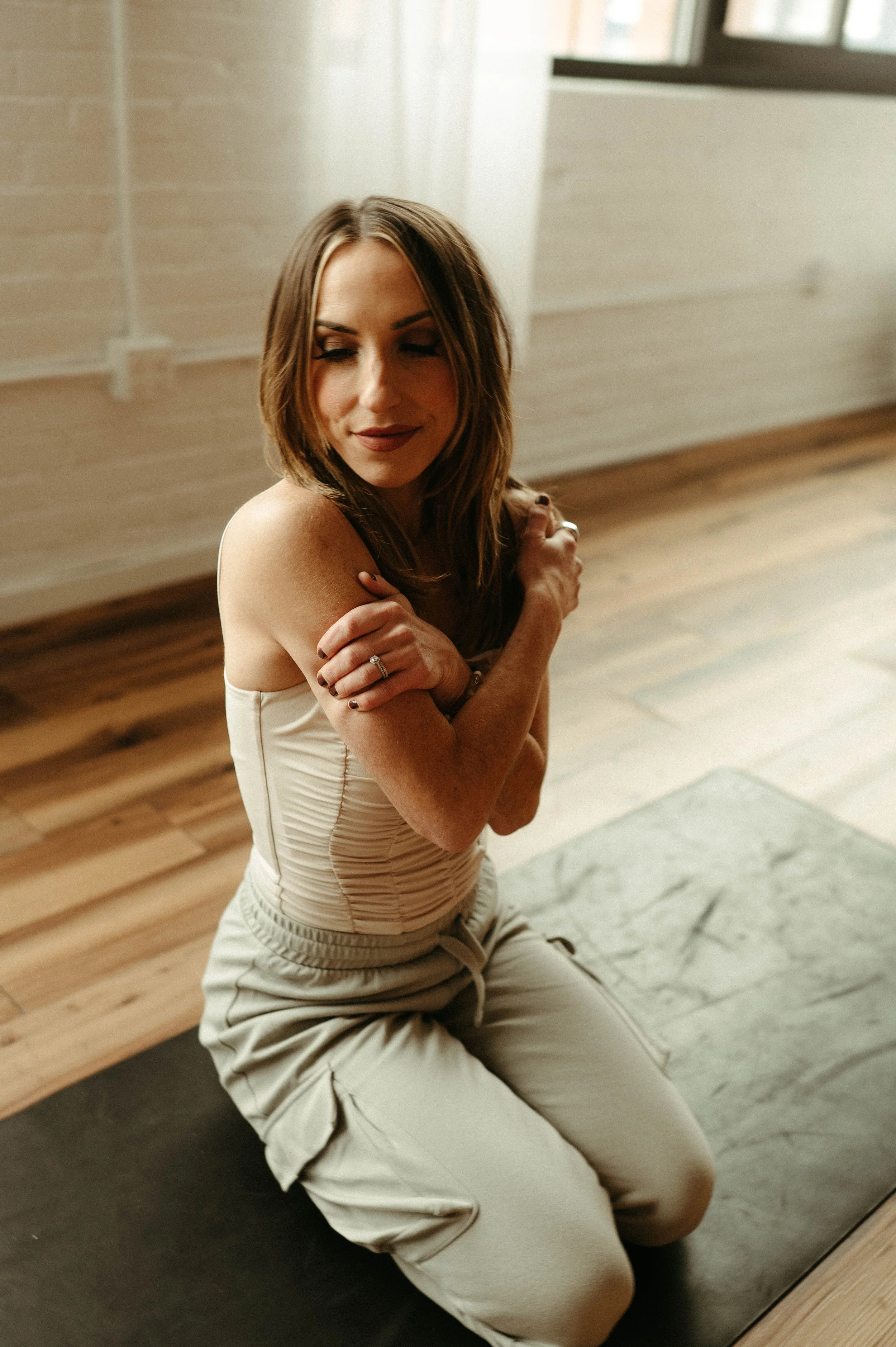
I am passionate about creating space where women can feel seen, just as they are. The work I do is shaped by both rigorous training and my own journey of healing. I've walked through much of this myself, and that informs everything I bring to our work together.
Complex PTSD
When the wound isn't a single moment but a pattern- of neglect, instability, or never quite feeling safe or seen.
Birth Trauma
Your experience of birth deserves to be witnessed and healed- not minimized or explained away.
Psychedelic Integration
For those returning from a psychedelic experience with more than they know what to do with- making meaning, integrating insight, and letting the body catch up with what the mind witnessed.
Sexual Trauma/CSA
For survivors ready to set down the shame that was never theirs to carry, and find their way back to safety and wholeness in their own body.
High Achievers/Burn Out
For the ones who look like they have it all together, but are running on empty beneath the surface and know this pace is unsustainable.
Ways to Work Together



Meet Your Trauma Therapist, Amy Williams
I used to think becoming a trauma therapist was simply a calling — until I realized it was also deeply tied to my own healing. My own experience in therapy shed light on the survival stress I had been carrying, and how my experiences shaped my beliefs and sense of self. Somatic therapy, yoga, and psychedelics were transformative for me — alleviating the depression and anxiety I'd lived with most of my adult life, bringing me closer to God, and helping me develop a more curious and compassionate relationship with myself, others, and the world around me.
Therapy with me is collaborative, relational, and rooted in genuine care. My style is grounded, warm, and personable. I hold deep reverence for the space we create together, and believe I can only take my clients as far as I've gone myself. That said, it's imperative to me that I continue doing my own inner work so that I can show up for you fully present, centered, and clear.
Becoming a mother reshaped everything, and deepened my passion for tending to the female nervous system in particular. Outside of the therapy room, you'll find me homeschooling my two young children, exploring local trails, with my nose in a book, and simply finding magic in the ordinary.